Live weather

Showing posts with label Puri. Show all posts

Thursday, May 23, 2024

In India, a Missing Key to a Temple’s Treasure Vault Ignites a Furor


In India, a Missing Key to a Temple’s Treasure Vault Ignites a Furor

July 14, 2018

Source:  The New York Times 


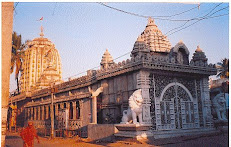
PURI, India — A group of men in loincloths assembled outside a 12th-century temple on a hot April day in Puri, India, preparing to venture deep inside to a pitch-black vault where piles of gold and silver jewelry were stored under lock and key.
To enter Jagannath Temple, dedicated to an important Hindu deity, the group of 16 archaeologists, Hindu priests and government officials had to pass through metal detectors. Their skimpy loincloths were required as a security measure along with oxygen masks in case the vault, unopened for more than three decades, lacked breathable air.


Their instructions were simple: Check the structural integrity of the vault and ignore the millions of dollars’ worth of antiquities stashed inside.
Anyone who spends much time in India’s Hindu temples is accustomed to being just steps from extreme wealth. Locked away in hundreds of the country’s largest temples is a staggering amount of gold, weighing as much as 8.8 million pounds, the World Gold Council has estimated. Under current market rates, that stockpile would be worth roughly $160 billion.

But despite their abundance of ancient riches, India’s temples are often poorly managed. With security measures lacking, they can be a tantalizing target for thieves.

The April expedition did not take long. An hour after entering the temple, the men emerged, telling a crowd of waiting pilgrims that they had not needed to enter the locked vault, known as the Ratna Bhandar, because they had been able to peer inside through the bars of a metal gate.
But two months later, another explanation was leaked to local news outlets: The men had not been able to go in because the keys to the vault were missing.
The response was swift. A top temple administrator was fired. Officials with the state government of Odisha, which includes Puri, called for an investigation. Soon after, they discovered that eight pounds of gold donated by visitors was also missing from the temple’s administrative offices.

Around Odisha, suspicion quickly mounted that some of the antique jewelry in the vault had been pilfered by what a local journalist, Sandeep Sahu, called “a criminal nexus of temple officials and servitors” who had access to the keys.

The theft of riches from temples is common in India. In one of the largest such cases, a Manhattan art dealer, Subhash Kapoor, has been implicated in the theft of $100 million worth of rare antiquities from remote, unguarded temples across India.

Operation Hidden Idol, as the investigation involving Mr. Kapoor was called, found that some of the items, such as a thousand-year-old bronze statue of the elephant-headed Ganesha, ended up at the world’s leading museums including the Metropolitan Museum of Art. Mr. Kapoor is facing trial in India.

But the hive-shaped Jagannath Temple in Puri, which forms part of the pilgrimage known as Char Dham — a four-part circuit traveled by Hindus to attain salvation — is far from an easy target.


A tight-lipped committee controls who can enter, where donations of money or jewelry are stored and how that information is disseminated to the public. The strict entry rules are designed to safeguard both the temple’s status as a sacred space and the treasures it contains.

In 1984, Indira Gandhi, then prime minister, was famously denied entry because her husband was a follower of Zoroastrianism, an ancient monotheistic religion. Even today, priests guard the entrance, turning away non-Hindus and some non-Indians from sects such as Hare Krishna, which is popular in the West.

An internal temple report from 1978 explained the policy — unusual for temples in India — with an analogy: “If the petals of a beautiful rose are torn and dissected for the purpose of investigating the ingredients of its color and smell, then the rose no longer remains a rose. It becomes a rubbish to be thrown away.”


In the 1930s, Mahatma Gandhi, the leader of India’s independence movement, refused to enter the temple in protest against its entry restrictions, according to Ramachandra Guha, an Indian historian. The temple eventually opened its doors to some Hindus who had been barred previously, including Dalits, a lower caste. But the insular mind-set remained. 


This year, the temple made headlines when India’s Supreme Court suggested changing the rule preventing non-Hindus from entering. But many recommendations were abandoned.


“There’s a very long history of absolute reactionist bigotry,” Mr. Guha said of the temple’s exclusionary policies.

Reports of internal strife have also tarnished the temple’s reputation over past decades. Managers of the temple said in the 1978 report that “misappropriation, theft, lawlessness, harassment of pilgrims and exploitation had become the order of the day.”

That same year, to encourage transparency, an inventory was made of the vault. Temple officials reported finding a hoard of nearly 500 pounds of antique silver and gold ornamental jewelry designed to adorn statues of gods.


The vault was last opened in 1985, according to R. N. Mishra, a former temple administrator, who said that he and a group of officials had retrieved some gold for maintenance work and promptly returned the key to the district treasury.


After the furor this year over the loss of the key, temple caretakers said they had found a duplicate in the record room of the local magistrate’s office. Instead of quelling anger, the apparent discovery inspired more questions: When was the duplicate key made? Was it real? And where was the original?

Mr. Mishra called the loss of the original key a “gross negligence,” saying that a duplicate had not existed when he was administrator and that he was not aware of one ever having been made. “One key, one lock,” he said.

Dibyasingha Deb, a member of Puri’s royal family and the chairman of the temple’s managing committee, said that accusations of mismanagement were unfair. He shifted blame to outsiders trying to “make us a laughingstock.”

“When people write about these incidents, and they don’t have any faith in our religion, our culture, they would like to make it a very sarcastic sort of a way of projecting things,” he said in an interview.


But Pitambar Acharya, a lawyer in the Orissa High Court, the highest one in Odisha State, said he felt that temple caretakers were bluffing on what he called the “key loss hullabaloo.”

Last month, Mr. Acharya and other officials from the Bharatiya Janata Party, an opposition party in Odisha, lodged a complaint with the police against top state officials in charge of tracking temple valuables, citing their failure to inventory jewelry in the vault regularly and questioning whether a duplicate key even existed.

“There has been a clear breach of trust,” he said, relating to unanswered questions on the loss of the temple key and the supposed discovery of a duplicate.

Outside the temple, in a packed plaza where men hammered together wooden chariots to be used for a festival, anger was palpable among priests, shop owners and visitors.


“The government is hiding facts,” said Satyavaan Sahu, 31, a worker at a nearby trinket shop. “It is a disrespect. Everybody’s faith in the temple will go away.”

As the sun set in Puri, a throng of devotees climbed the temple’s broad, stone steps, where a man ushered them in by tapping their heads with two slender sticks, a transfer of the deity’s blessings.

Inside the temple, priests squatted to light oil lamps. Flanked by pillars covered in brightly colored motifs, thousands of men and women threw up their hands at the sight of a life-size statue of Lord Jagannath. Nearby, the entrance to the vault was shrouded in darkness behind metal bars.

Sonalata Das, 67, a bespectacled woman in a brown silk sari, lingered with clasped hands in front of a painting of Lord Jagannath. Asked about the missing keys, her face hardened.

“I prayed that God would completely finish off the person who has fooled around with the key for his wealth,” she said. “May he be destroyed.”

Follow Kai Schultz and Suhasini Raj on Twitter: @Kai_Schultz and @suhasiniraj.

To Read The Article Click here: https://www.nytimes.com/2018/07/14/world/asia/india-jagannath-temple-key-gold.html 

Friday, December 7, 2012

Go Gopalpur: Mayfair to open heritage resort at Gopalpur-on-Sea from December 9


Mayfair Hotels & Resorts, which operates the Mayfair chain of luxury hotels in various parts of the country, will open its latest resort at Gopalpur-on-Sea for commercial operations from December 9. The sprawling resort- Mayfair Palm Beach Resort, the eighth property of Odisha-based Mayfair Group, is equipped with all facilities of a luxury hotel, spread over eleven acres of land. The Mayfair Group acquired this heritage property from the Oberoi Group in September 2011 and decided to renovate it, said Mayfair Group chairman and managing director Dilip Ray. The resort, at present, has 32 rooms. In addition to the existing facilities, Mayfair Group plans to add a tennis court and golf course to the resort. Besides Gopalpur, the tourists can also visit some other places in Ganjam district like the habitats of the blackbuck and peacock near Aska and the mass nesting of Olive Ridley turtles at Gokharakuda near Rushikulya river mouth, Ray said.

History & Background

Before 1830, an Englishman by the name of John Spence had established the Spence's hotel in Calcutta, making it perhaps the oldest western style hotel outside Europe and in 1841 David Wilson built the 'Wilson Hotel' now known as 'Great Eastern Hotel', also, in Calcutta, which was considered to be one of the best of it's kind, in this part of the world. No one had really by then heard of Gopalpur. And Gopalpur returned the compliment. Barely 16 kms from Berhampur, the commercial hub of Southern Orissa, in the Bay of Bengal, it was extremely uncanny of a young Italian Signor Maglioni, to mysteriously find home all the way from Sicily , and establish the 'Palm Beach' in 1914. It was Odisha's first hotel, of its kind.
Gopalpur on sea how very British suffix on sea like Midleton- on- sea /Frankton-on- sea was a palm fringed beach and Maglioni's dream fused with the sepia and romance of the langorous town ,where the silence was broken only by the breakers and the occasional coconut thudding on the ground.
Originally a small fishing village on the coast of Odisha when it was so named, when a temple dedicated to Lord Krishna 'Krishna Gopal' temple was built in the 18th Century. Legend has it that Gopalpur's sands had witnessed maritime ventures of a much earlier age when Odisha had flourished as part of the Kalinga Kingdom in the 4th and 5th century B.C early colonists to Java, Bali and Sumatra were supposed to have sailed from here, carrying the seeds of Indian civilization with them.
Between the two World Wars ( 1914-1918 and 1939-1945) Gopalpur was overrun by the men in Khakis and became the eastern sectors base for flying out troops and supplies to Rangoon. The commercial port became the living symbol of its grandeur and the pulsating lifestyle was evident in the packed dance floors of the hotel 'Blue Haven'. In 1945. The World War2 came to an end and India inched towards being an independent, sovereign republic. By 1947the British had left the Indian shores and the commercial activity of Gopalpur had dwindled to a trickle. The once vibrant, emblazoned ball rooms gaped at open skies. The noisy wharfs moulted and the warehouses became seedy gateways for derelicts. Gopalpur's importance dwindled when trade with Burma abruptly ceased during the war. When the British left India, even members of rich Bengali homes preferred to holiday in other places and Gopalpur began to revert to what it originally was a fishing village.
In 1938,another enterprising, courageous Indian Hotelier, Rai bahadur M.S Oberoi had already taken over a closed down 'Grand' hotel from the Armenian Stephen Arathoon and reinvented it with trademark Oberoi elan' as the 'Oberoi Grand', to make it the most sought after address in Calcutta. In 1947, on a chance visit to Maglioni's 'Palm Beach' hotel his keen eyes did not miss the state of disrepair that the hotel had fallen to. His instinct smelled a bargain and Maglioni was only too happy to sell it to the Oberoi's for a paltry 3.0 lacs rupees.,thereby enabling the Oberoi legend to root itself as the 'Oberoi Palm Beach'.As it's doors opened the who's who of the country , from Prime ministers, to celebrities and royalty left their impressions behind along with their footprints on the sands of time. History was being created every day, as the hotel played hosts to the history makers.
Maglioni's Mediterranean Architecture had undergone a makeover by the Oberoi's ,but the core of the structure was slowly but surely giving way to the Gopalpur on Seacorroding effects of the saline sea breeze. The erosion had begun and no amount of hasty repairs could make it anymore safe for it's guests. The Oberois closed gates in 2002 and decided to distance themselves and sell this piece of Orissa's history to any worthy taker . It was at this time, 201 1, that 'Mayfair hotels and resorts' stepped in. T o protect, renovate and restore the' Palm beach',where history echoed from every cobble stone. Lured by the fact that Gopalpur-on-sea still stood untouched by the concrete commercialism that had destroyed nearby Puri's equally pristine beach and also because Gopalpur had actually wrapped itself in a romantic mysticism that tugged at history but refused to drown in its excesses.
Rebuilding the core structure from scratch, lovingly touching up the details, reinventing the old magic, preserving the memories, Mayfair has now breathed new life to the 'Oberoi palm Beach' in its all new avatar- 'The Mayfair palm Beach resort' Its the ultimate tribute to your senses and helps in stealing your time and mind in order to find your DNA and recreate you for future generations... where always, every time, anyday 'sometimes the sky looks like the sea and sometimes the sea looks like the sky'.
Source: Business Standard & www.mayfairhotels.com

Wednesday, January 18, 2012

Dolphin census conducted at Chilika lake


Berhampur: Annual dolphin census was conducted in Chilika Lake by Chilika Development Authority (CDA) on January 17, 2012. It may be noted that the Chilika Lake in Odisha, which spreads in three districts, Ganjam, Khurda and Puri and covers 1,100 square km is one of the largest salt-water lakes in the country and Asia.
It is home to numerous species of fishes, birds including the Siberian Duck and Ibis and endangered Irrawaddy Dolphins. These friendly Oceanic Dolphins who get their name from Myanmar's most important river, are found mainly in and around the Bay of Bengal and South East Asia. The local fisherman in Ganjam and Puri consider them lucky and it was believed that they drive fish towards their nets.
The Executive director of CDA, Ajit Patnaik said 18 teams were involved in this census. According to last year's dolphin census there were 156 Irrawaddy dolphins in Chilika Lake.
Source: The Hindu 

Saturday, December 17, 2011

Lankan wildlife officials praise Chilika conservation efforts

Berhampur (Odisha): Sri Lankan wildlife officials have praised India's conservation efforts for flora and fauna of Chilika Lake in the state of Odisha, with the active participation of locals. "We are really impressed by the efforts of India to conserve the wildlife with community participation and also protect their livelihood," said H D Ratnayake, Director General, Wildlife Conservation Department of Sri Lanka government. Led by Ratnayake, 25 Wildlife department officials are on a two-week India visit from November 29, to gain knowledge of the wildlife conservation as well as how to tackle the men-animal conflict. Officials of Wildlife Institute of India (WII) is coordinating their tour. The team is slated to wind up the tour tomorrow. In Chilika, the biggest wetland of the country, the team has visited Satapada, Managalajodi and the Nalabana bird sanctuary. "We are really excited to see the dolphin and number of bird species who visited the wetland from far off places in every winter," he said. Divisional Forest Officer, Chilika B P Acharya told them about the importance of wetland and the conservation effort taken by his government to protect the millions of birds in the lake. "The lake is known as the paradise for the migratory birds. The winged guests come to the wetland every year as we provide them suitable habitat including the food and nesting ground," DFO told the team. Source: IBN Live